Introduction
Biotechnology sits at the intersection of biology, chemistry, engineering, data science, and medicine. It converts biological knowledge into products and services—vaccines, biologic drugs, diagnostics, improved crops, industrial enzymes, biomaterials, and environmental solutions. Because biotech is inherently applied, career options span wet-lab, manufacturing, clinical/medical, regulatory, data/AI, and business functions.
Biotechnology as a Career Choice
Imagine a career where your daily work isn't just a job, but a direct contribution to the most urgent missions of our time. That’s the promise of biotechnology. This isn't just another industry; it's the frontier of human progress, merging the power of biology with cutting-edge technology to solve problems that were once unsolvable. While many careers offer a paycheck, a career in biotech offers a legacy. You're not following trends—you're creating the future of medicine, agriculture, and environmental sustainability. It's a field for those who want their intellect and passion to have a tangible, positive impact on the world.
1. Work That Directly Changes the World
The impact of a biotech career is immediate and profound. Your skills become the engine behind global health breakthroughs, like the mRNA vaccines that transformed a pandemic and the gene therapies offering cures for previously untreatable diseases. You could be engineering drought-resistant crops to bolster food security or developing bio-based materials to replace plastics. This is work that matters, offering a powerful sense of purpose that few other sectors can match. You go home each day knowing your contribution directly touches human lives and the health of our planet.
2. Unparalleled Career Mobility & Versatility
Your value in this field is both deep and remarkably broad. A foundation in biotechnology isn't a narrow track; it's a passport to a universe of high-growth industries. The core skills you master—whether in molecular biology, data analysis, or process development—are critically needed everywhere from pioneering pharmaceutical labs and agile medical device startups to sustainable agriculture giants and cutting-edge industrial biomanufacturing plants. This unparalleled mobility means your career can evolve and pivot across sectors, fueled by curiosity and aligned with the world's evolving needs, without ever starting from scratch.
3. Strong Earning Potential That Values Expertise
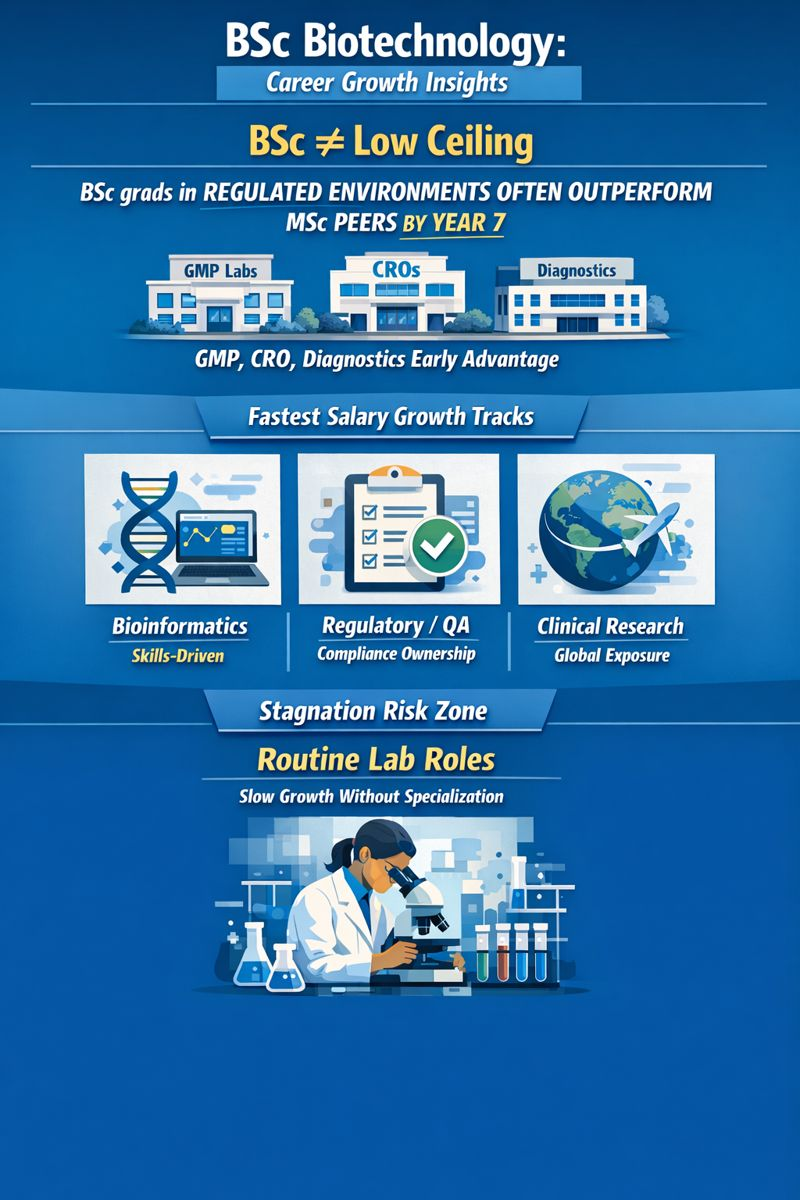
Financially, this strategic importance translates into strong, stable earning potential. This is a knowledge-intensive field that rewards specialized expertise. In the United States, for example, median salaries for biotech-aligned professions reflect their high value: Bioengineers and Biomedical Engineers command a median wage of $106,950, Biochemists and Biophysicists earn $103,650, and Medical Scientists see a median of $100,590 (BLS, May 2024). These figures represent more than just compensation; they are an investment in the specialized talent required to drive innovation that benefits society.
4. A Front-Row Seat to the Future (It’s Never Boring)
Most excitingly, you are entering the field at its inflection point. Biotechnology is not static; it is the definition of fast-evolving innovation. Just as you master today's tools, tomorrow's breakthroughs—in CRISPR-based gene editing, AI-driven drug discovery, synthetic biology, and advanced cell therapies—will create entirely new roles and specialties. Your career will be a journey of continuous learning at the very edge of science and technology. This constant evolution ensures that your work remains intellectually thrilling and positions you at the forefront of the next wave of global innovation.
The Bottom Line: Future-Proof Your Ambition
Choosing a career in biotech is a strategic decision to future-proof your professional life. It combines unwavering purpose with exceptional versatility, financial reward with boundless growth. It’s a calling for the ambitious problem-solver ready to build a career that doesn't just adapt to the future, but actively creates it. The question isn't whether the world needs biotechnology—it desperately does. The question is whether you are ready to help build it.